Social Media Marketing Strategy for Beginners: A Step-by-Step Guide
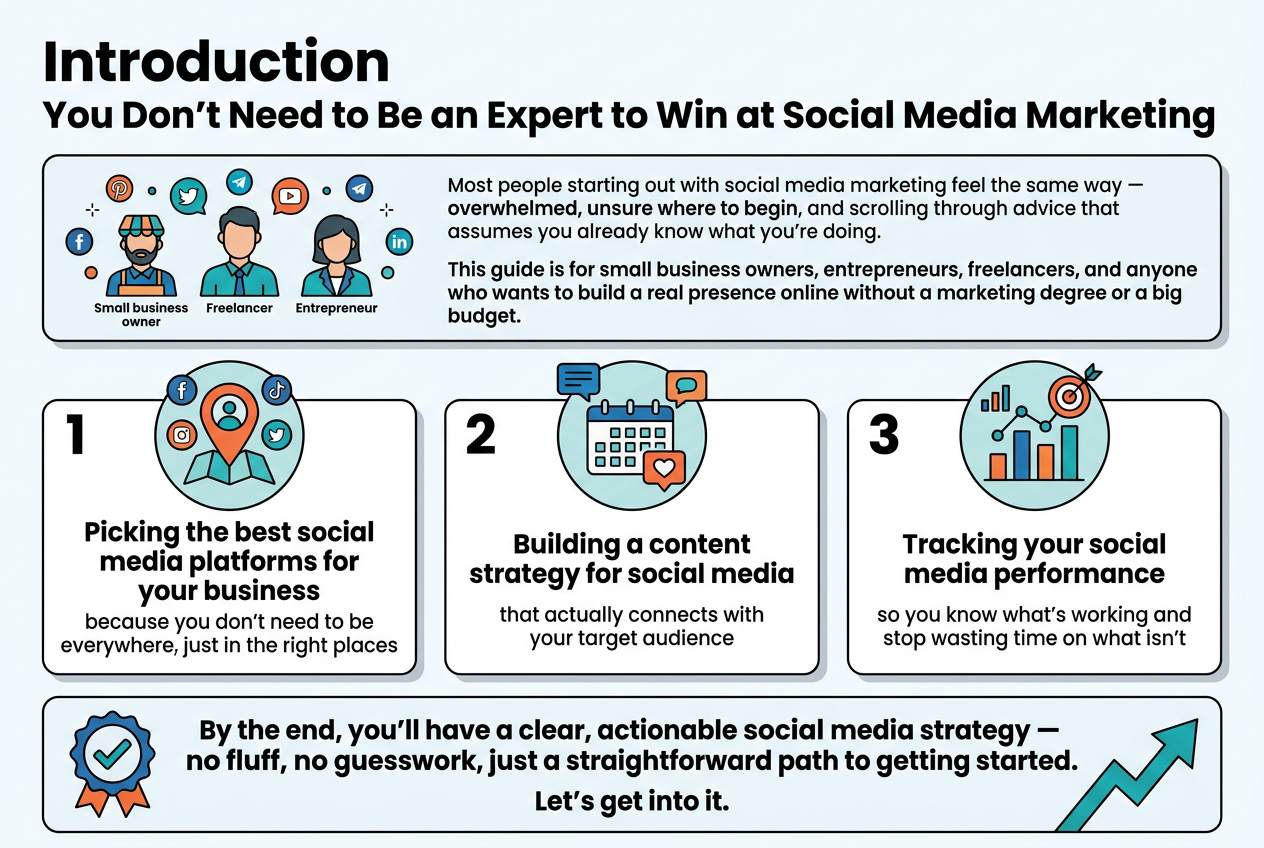
You Don’t Need to Be an Expert to Win at Social Media Marketing
Most people starting out with social media marketing feel the same way — overwhelmed, unsure where to begin, and scrolling through advice that assumes you already know what you’re doing.
This guide is for small business owners, entrepreneurs, freelancers, and anyone who wants to build a real presence online without a marketing degree or a big budget.
Learn how to create a social media marketing strategy for beginners. Discover content planning, platform selection, audience targeting, and growth tips.
Here’s what we’ll walk through together:
- Picking the best social media platforms for your business — because you don’t need to be everywhere, just in the right places
- Building a content strategy for social media that actually connects with your target audience
- Tracking your social media performance so you know what’s working and stop wasting time on what isn’t
By the end, you’ll have a clear, actionable social media strategy — no fluff, no guesswork, just a straightforward path to getting started.
Let’s get into it.
Understand the Basics of Social Media Marketing
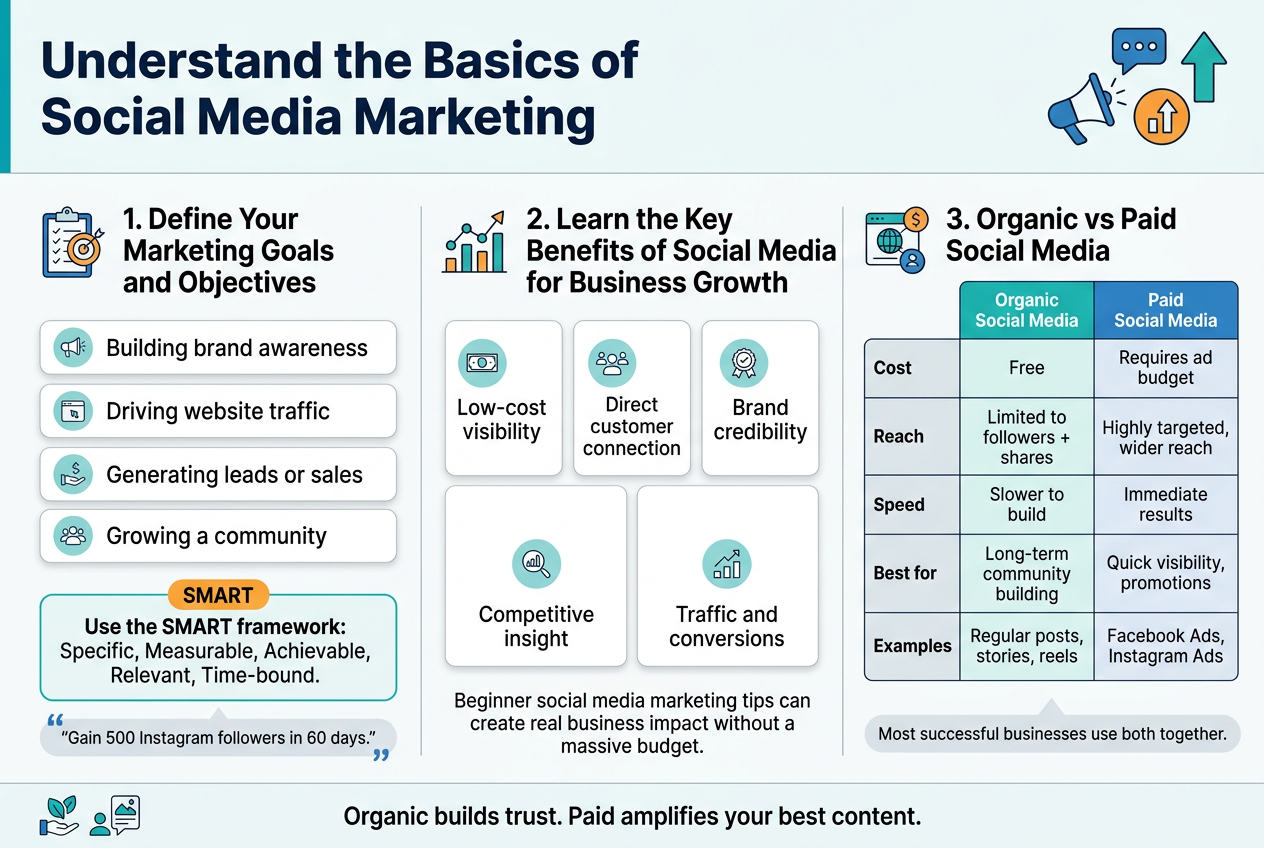
Define Your Marketing Goals and Objectives
Before posting a single piece of content, get clear on what you actually want to achieve. Without specific goals, social media marketing becomes a guessing game.
Common goals for beginners include:
- Building brand awareness – Getting more people to recognize your business
- Driving website traffic – Sending followers to your site or landing pages
- Generating leads or sales – Turning social media attention into real revenue
- Growing a community – Building a loyal audience around your brand
Use the SMART framework to shape your goals: make them Specific, Measurable, Achievable, Relevant, and Time-bound. Instead of “get more followers,” aim for “gain 500 Instagram followers in 60 days.”
Learn the Key Benefits of Social Media for Business Growth
Social media gives businesses of all sizes access to tools and audiences that were previously out of reach. Here’s why it’s worth your time:
- Low-cost visibility – Reaching thousands of people organically costs nothing but effort
- Direct customer connection – You can talk to your audience in real time, getting feedback instantly
- Brand credibility – An active, consistent presence builds trust with potential customers
- Competitive insight – You can see what competitors are doing and spot gaps in the market
- Traffic and conversions – Every post is a chance to guide people toward your product or service
For anyone starting out, these beginner social media marketing tips can create real business impact without a massive budget.
Identify the Difference Between Organic and Paid Social Media
Understanding this distinction shapes your entire social media strategy.
| Organic Social Media | Paid Social Media | |
|---|---|---|
| Cost | Free | Requires ad budget |
| Reach | Limited to followers + shares | Highly targeted, wider reach |
| Speed | Slower to build | Immediate results |
| Best for | Long-term community building | Quick visibility, promotions |
| Examples | Regular posts, stories, reels | Facebook Ads, Instagram Ads |
Most successful businesses use both together. Organic content builds trust and keeps your audience engaged day-to-day. Paid ads amplify your best content and bring in new eyes fast.
As a beginner, start with organic to find your voice, then layer in paid once you know what’s working.
Choose the Right Social Media Platforms for Your Business
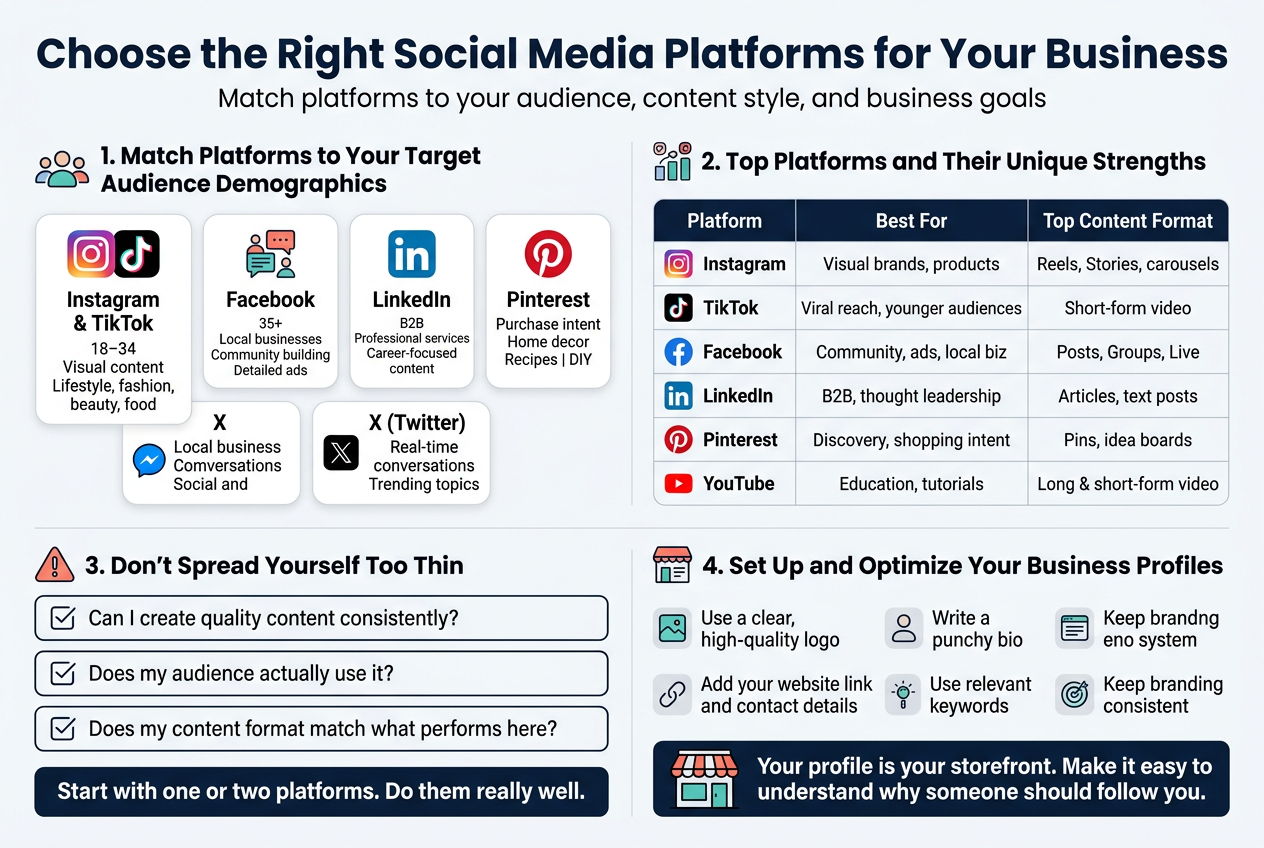
Match Platforms to Your Target Audience Demographics
Every social media platform attracts a different crowd. Before picking where to show up, ask yourself: where does my ideal customer actually spend their time?
- Instagram & TikTok skew younger (18–34), favor visual content, and work well for lifestyle, fashion, beauty, and food brands.
- Facebook still dominates with adults 35+, making it great for local businesses, community building, and detailed ad targeting.
- LinkedIn is the go-to for B2B brands, professional services, and career-focused content.
- Pinterest drives purchase intent, especially for home decor, recipes, and DIY niches.
- X (Twitter) suits brands that want to join real-time conversations and trending topics.
Compare the Top Platforms and Their Unique Strengths
| Platform | Best For | Top Content Format |
|---|---|---|
| Visual brands, products | Reels, Stories, carousels | |
| TikTok | Viral reach, younger audiences | Short-form video |
| Community, ads, local biz | Posts, Groups, Live | |
| B2B, thought leadership | Articles, text posts | |
| Discovery, shopping intent | Pins, idea boards | |
| YouTube | Education, tutorials | Long & short-form video |
Picking the best social media platforms for your business comes down to where your audience hangs out and where your content style fits naturally.
Avoid Spreading Yourself Too Thin by Focusing on the Best Fits
A common beginner mistake is jumping on every platform at once. That leads to burnt-out creators and mediocre content everywhere.
Start with one or two platforms. Do them really well. You can always expand once you’ve built a rhythm and understand what resonates with your audience.
Ask yourself:
- Can I realistically create quality content for this platform consistently?
- Does my audience actually use it?
- Does my content format (video, images, text) match what performs here?
If the answer is no to any of these, skip it for now.
Set Up and Optimize Your Business Profiles for Maximum Impact
A half-finished profile kills credibility fast. When setting up your profiles:
- Use a clear, high-quality logo as your profile photo
- Write a punchy bio that explains what you do and who you help
- Add your website link and contact details
- Use relevant keywords in your bio to help people find you
- Keep branding consistent — same colors, tone, and handle across platforms
Think of your profile as your storefront. Make it easy for someone to land there and immediately understand why they should follow you.
Know Your Target Audience Inside and Out
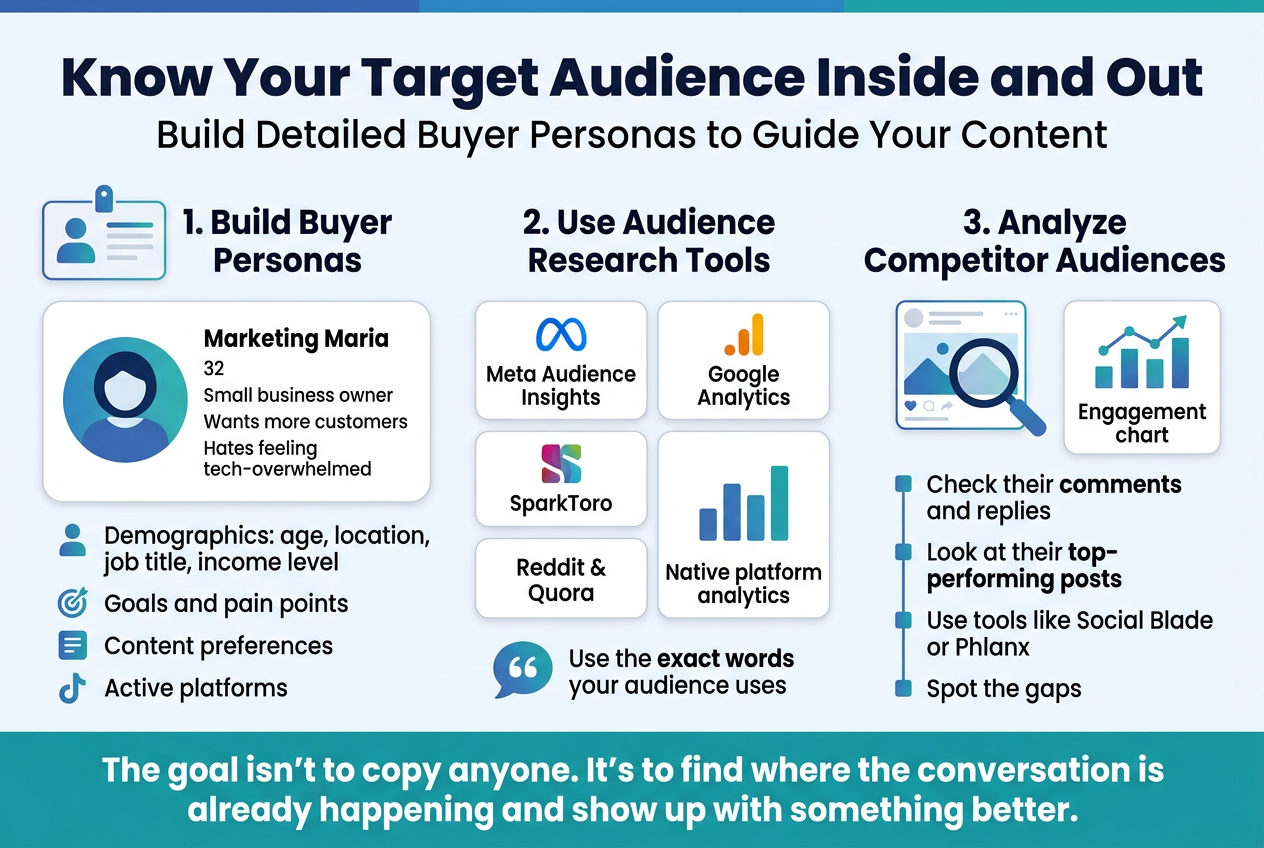
Build Detailed Buyer Personas to Guide Your Content
A buyer persona is basically a fictional profile of your ideal customer — and it’s one of the most practical tools in your social media marketing toolkit. Without one, you’re essentially guessing who you’re talking to.
To build a solid persona, gather details like:
- Demographics – age, location, job title, income level
- Goals and pain points – what do they want to achieve? What keeps them up at night?
- Content preferences – do they watch short videos, read long posts, or scroll through memes?
- Active platforms – where do they actually spend time online?
Give your persona a name and a backstory. “Marketing Maria, 32, a small business owner who wants more customers but hates feeling tech-overwhelmed” is far more useful than “women aged 25–45.”
Use Audience Research Tools to Uncover Valuable Insights
Once you have a rough idea of your target audience, research tools help you sharpen it. Knowing your audience on social media goes beyond guesswork — real data tells a much better story.
Some go-to tools worth exploring:
| Tool | What It Helps With |
|---|---|
| Meta Audience Insights | Demographics and interests on Facebook/Instagram |
| Google Analytics | Who’s visiting your site and from where |
| SparkToro | What your audience reads, follows, and searches |
| Reddit & Quora | Real questions and language your audience uses |
| Native platform analytics | Follower data on Instagram, LinkedIn, TikTok, etc. |
Pay close attention to the exact words your audience uses to describe their problems. Mirroring that language in your content makes everything feel more relevant and personal.
Analyze Competitor Audiences to Find Untapped Opportunities
Your competitors have already done some of the heavy lifting. Looking at who engages with their content can reveal audience segments you might be missing.
Here’s how to dig in:
- Check their comments and replies – notice recurring questions or complaints
- Look at their top-performing posts – what topics get the most traction?
- Use tools like Social Blade or Phlanx to gauge engagement rates
- Spot the gaps – if a competitor ignores a particular pain point, that’s your opening
The goal isn’t to copy anyone. It’s to find where the conversation is already happening and show up with something better.
Create a Winning Content Strategy
Select Content Types That Resonate With Your Audience
Not every content format works for every audience. Test a mix of these popular types to see what clicks:
- Short-form video (Reels, TikToks) – great for tutorials, behind-the-scenes, and quick tips
- Carousels – perfect for step-by-step guides or listicles on Instagram and LinkedIn
- Static images – product showcases, quotes, infographics
- Stories – polls, Q&As, and day-in-the-life content that feels personal
- Long-form posts – thought leadership and storytelling on LinkedIn or Facebook
Pay attention to your analytics. Double down on what gets saves, shares, and comments.
Build a Consistent Posting Schedule With a Content Calendar
Consistency beats frequency every time. A content calendar keeps you organized and prevents the panic of scrambling for ideas last minute.
| Tool | Best For | Free Plan? |
|---|---|---|
| Buffer | Scheduling & analytics | Yes |
| Notion | Planning & organizing | Yes |
| Later | Visual Instagram planning | Yes |
| Trello | Team collaboration | Yes |
Start with 3–4 posts per week per platform, then adjust based on engagement data.
Craft Compelling Captions and Calls to Action That Drive Engagement
A great visual stops the scroll — a great caption earns the tap. Keep captions conversational, lead with a hook in the first line, and always end with a clear call to action (CTA).
Strong CTAs to try:
- “Save this for later”
- “Drop your answer in the comments”
- “Tag someone who needs to see this”
- “Click the link in bio to learn more“
Avoid vague CTAs like “check it out.” Be specific about what you want people to do next.
Repurpose Content Across Multiple Platforms to Maximize Reach
One idea can fuel a week’s worth of content. Turn a blog post into an Instagram carousel, a LinkedIn post, three tweet-sized tips, and a short video. This is one of the smartest beginner social media marketing tips to stretch your effort without burning out.
Balance Promotional and Value-Driven Content for Long-Term Growth
A good rule of thumb is the 80/20 split — 80% educational, entertaining, or relatable content, and 20% promotional. If every post is a sales pitch, people tune out fast. Earn trust first, and the sales follow naturally.
Grow and Engage Your Social Media Community
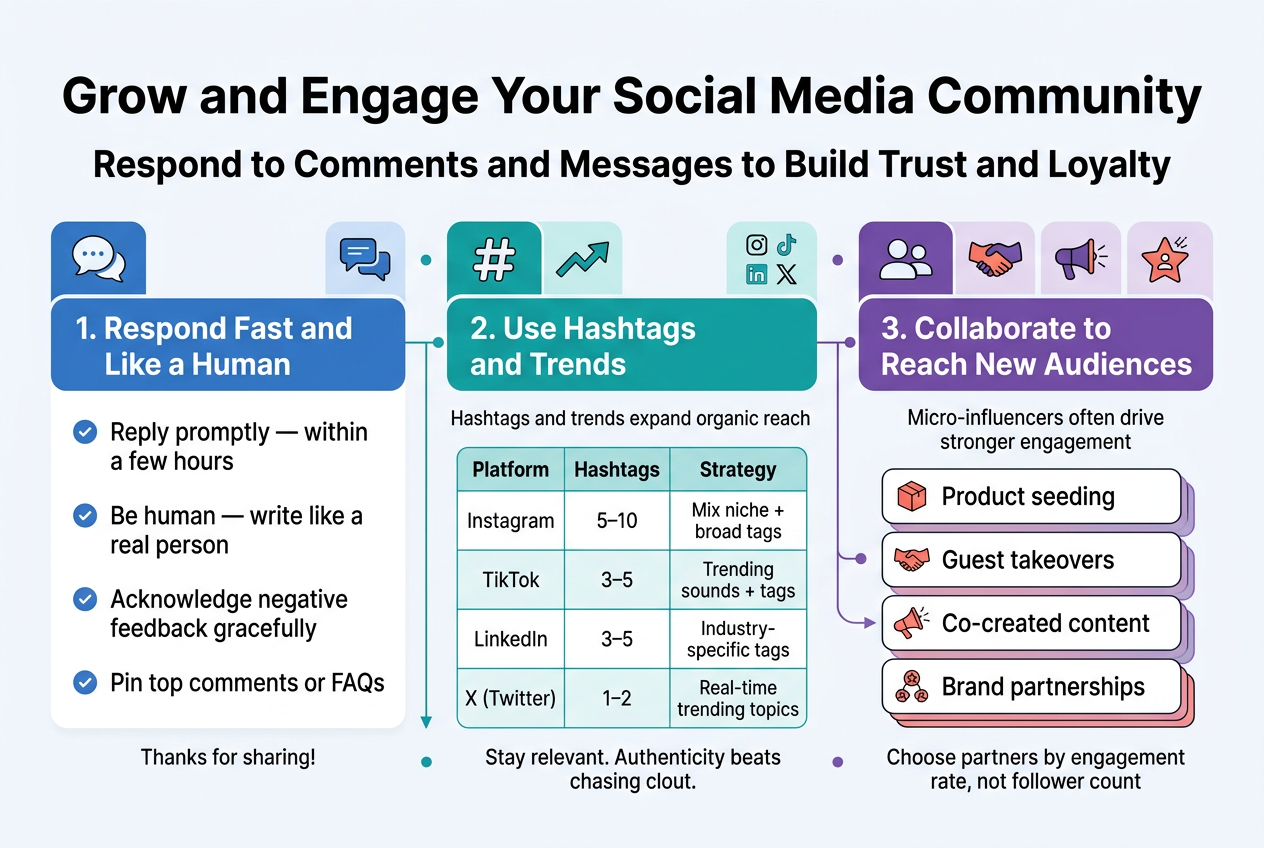
Respond to Comments and Messages to Build Trust and Loyalty
One of the fastest ways to grow social media engagement is simply to show up in conversations. When someone comments on your post or sends a DM, they’re giving you a golden opportunity to build a real connection.
- Reply promptly — aim to respond within a few hours, especially to questions or complaints
- Be human — skip the copy-paste corporate responses and write like a real person
- Acknowledge negative feedback — handle criticism gracefully and publicly; others are watching how you handle it
- Pin top comments or FAQs to save time and add value for new visitors
Even a simple “Thanks for sharing!” goes a long way. Consistency here builds the kind of trust that turns followers into loyal fans.
Use Hashtags and Trends to Expand Your Organic Reach
Hashtags and trending topics are free tools that put your content in front of people who don’t follow you yet — making them essential for anyone learning how to grow a social media following from scratch.
Hashtag best practices by platform:
| Platform | Recommended Hashtags | Strategy |
|---|---|---|
| 5–10 per post | Mix niche + broad tags | |
| TikTok | 3–5 per video | Lean into trending sounds + tags |
| 3–5 per post | Industry-specific tags work best | |
| X (Twitter) | 1–2 per tweet | Jump on real-time trending topics |
For trends, stay relevant without forcing it. If a trend doesn’t fit your brand, skip it. Authenticity always beats chasing clout.
Collaborate With Influencers and Brand Partners to Reach New Audiences
You don’t need a massive budget to make influencer marketing work. Micro-influencers (10K–100K followers) often drive stronger engagement than mega accounts — and they’re far more affordable.
Ways to collaborate effectively:
- Product seeding — send free products in exchange for honest reviews
- Guest takeovers — let an influencer run your Stories or Lives for a day
- Co-created content — develop posts or videos together that both audiences enjoy
- Brand partnerships — team up with non-competing businesses that share your target audience
When choosing partners, look at engagement rate over follower count. A creator whose audience actually trusts them will deliver far better results than someone with inflated numbers and low interaction.
Track Performance and Continuously Improve Your Strategy
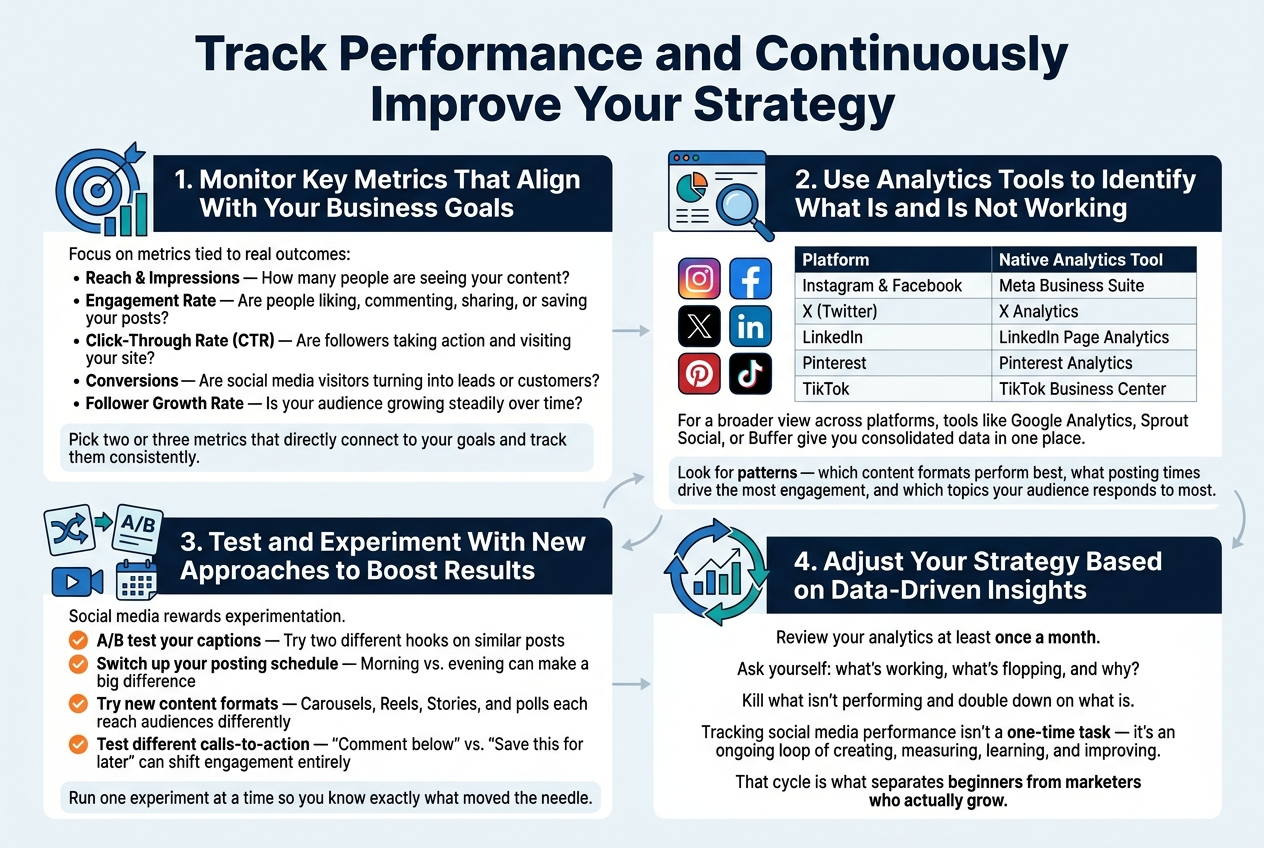
Monitor Key Metrics That Align With Your Business Goals
Before diving into numbers, get clear on what success actually looks like for your business. Vanity metrics like follower counts feel good but rarely tell the full story. Focus on metrics tied to real outcomes:
- Reach & Impressions – How many people are seeing your content?
- Engagement Rate – Are people liking, commenting, sharing, or saving your posts?
- Click-Through Rate (CTR) – Are followers taking action and visiting your site?
- Conversions – Are social media visitors turning into leads or customers?
- Follower Growth Rate – Is your audience growing steadily over time?
Pick two or three metrics that directly connect to your goals and track them consistently.
Use Analytics Tools to Identify What Is and Is Not Working
Every major platform has built-in analytics — use them. Here’s a quick breakdown:
| Platform | Native Analytics Tool |
|---|---|
| Instagram & Facebook | Meta Business Suite |
| X (Twitter) | X Analytics |
| LinkedIn Page Analytics | |
| Pinterest Analytics | |
| TikTok | TikTok Business Center |
For a broader view across platforms, tools like Google Analytics, Sprout Social, or Buffer give you consolidated data in one place. Look for patterns — which content formats perform best, what posting times drive the most engagement, and which topics your audience responds to most.
Test and Experiment With New Approaches to Boost Results
Social media rewards experimentation. If you’ve been posting static images, try short-form video. If long captions aren’t getting traction, test punchy two-liners. A few simple ways to experiment:
- A/B test your captions – Try two different hooks on similar posts
- Switch up your posting schedule – Morning vs. evening can make a big difference
- Try new content formats – Carousels, Reels, Stories, and polls each reach audiences differently
- Test different calls-to-action – “Comment below” vs. “Save this for later” can shift engagement entirely
Run one experiment at a time so you know exactly what moved the needle.
Adjust Your Strategy Based on Data-Driven Insights
Review your analytics at least once a month. Ask yourself: what’s working, what’s flopping, and why? Kill what isn’t performing and double down on what is. Tracking social media performance isn’t a one-time task — it’s an ongoing loop of creating, measuring, learning, and improving. That cycle is what separates beginners from marketers who actually grow.
FAQ
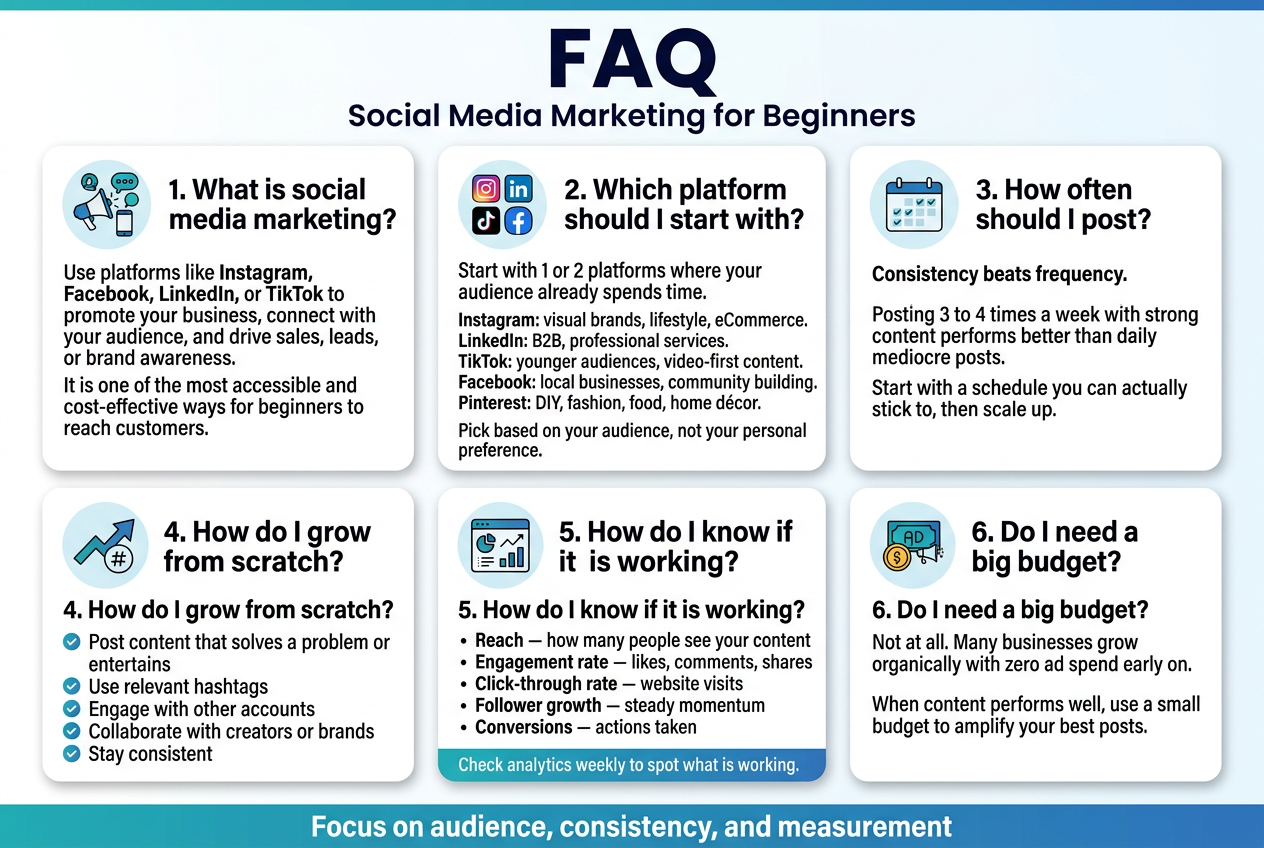
What is social media marketing, and why does it matter for beginners?
Social media marketing means using platforms like Instagram, Facebook, LinkedIn, or TikTok to promote your business, connect with your audience, and drive real results—whether that’s sales, leads, or brand awareness. For beginners, it’s one of the most accessible and cost-effective ways to reach potential customers without a massive budget.
Which social media platform should I start with?
Start with one or two platforms where your target audience already spends time. Here’s a quick guide:
| Platform | Best For |
|---|---|
| Visual brands, lifestyle, eCommerce | |
| B2B, professional services | |
| TikTok | Younger audiences, video-first content |
| Local businesses, community building | |
| DIY, fashion, food, home décor |
Pick based on your audience—not your personal preference.
How often should I post on social media?
Consistency beats frequency every time. Posting three to four times a week with strong content will outperform daily posting of mediocre stuff. Start with a schedule you can actually stick to, then scale up.
How do I grow my social media following from scratch?
- Post content that solves a problem or entertains your audience
- Use relevant hashtags to get discovered
- Engage with other accounts in your niche—comment, reply, share
- Collaborate with creators or brands your audience already follows
- Stay consistent; growth takes time, especially at the start
How do I know if my social media strategy is actually working?
Track these key metrics regularly:
- Reach – how many people see your content
- Engagement rate – likes, comments, shares relative to your follower count
- Click-through rate – are people visiting your website?
- Follower growth – steady increase over time signals momentum
- Conversions – are social media visitors taking action?
Most platforms have built-in analytics tools. Check them weekly to spot what’s working.
Do I need a big budget to succeed at social media marketing?
Not at all. Many businesses grow organically with zero ad spend, especially early on. Once you understand what content resonates with your audience, you can put a small budget behind your best-performing posts to amplify results.
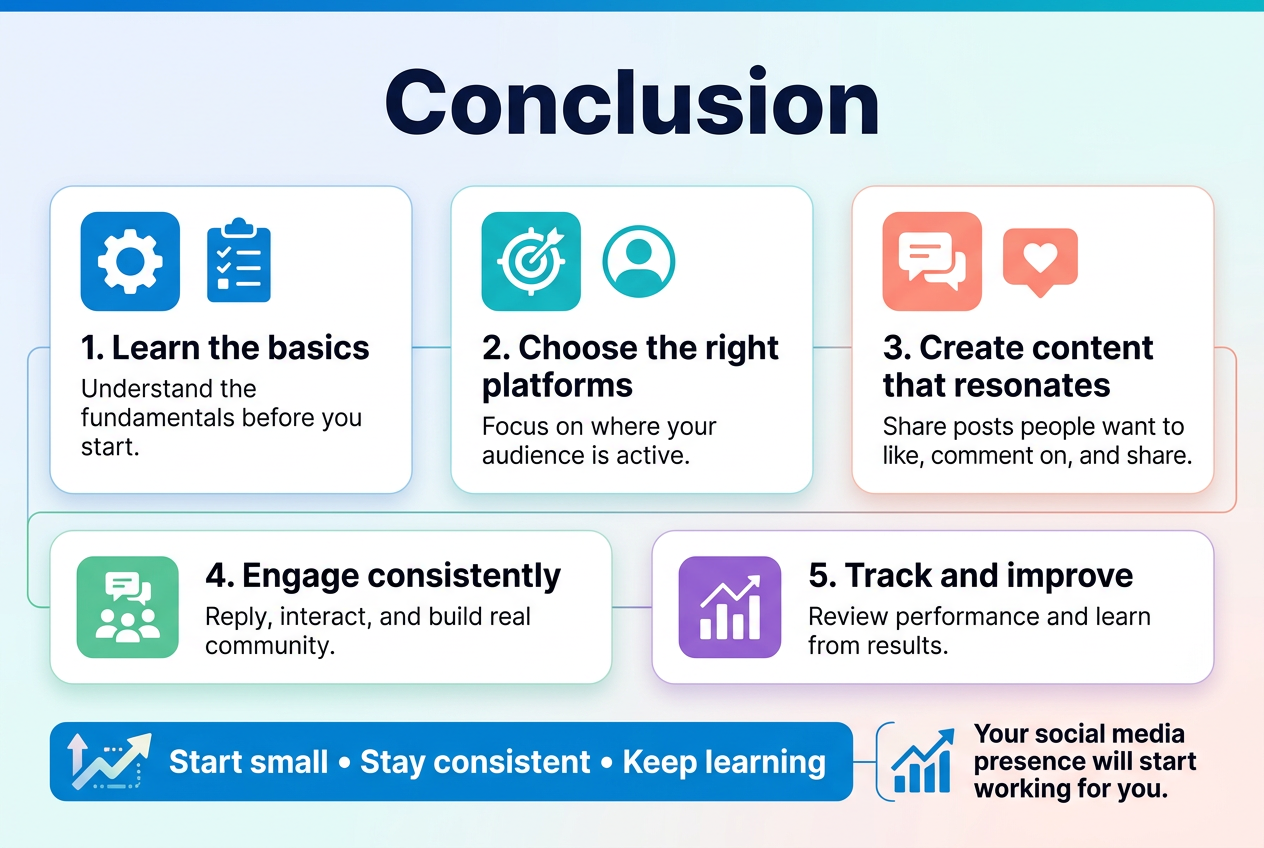
Getting started with social media marketing can feel overwhelming, but it doesn’t have to be. By understanding the basics, picking the right platforms, knowing your audience, and creating content that actually resonates, you’re already ahead of the game. Add in consistent community engagement and regular performance tracking, and you’ve got a solid foundation to grow your brand online.
The best part? You don’t need to get everything perfect on day one. Start small, stay consistent, and keep learning from what your audience tells you through their likes, comments, and shares. Take it one step at a time, and before you know it, your social media presence will start working for you instead of the other way around.